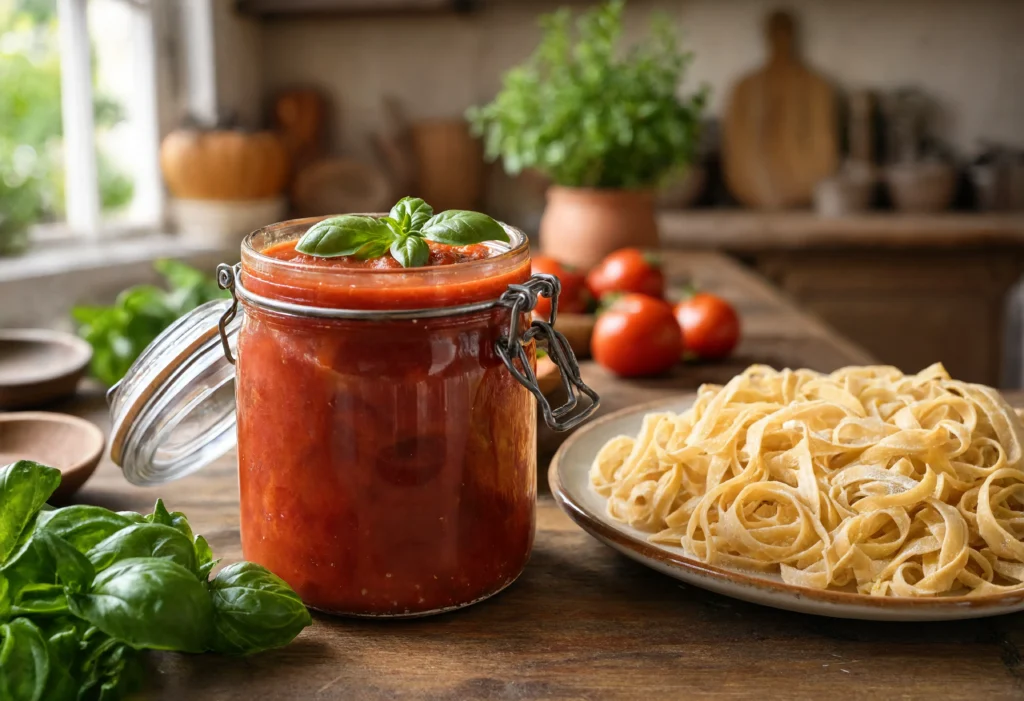
You just cooked a beautiful dinner with hand-crafted fettuccine, the kind that makes the whole kitchen smell like an Italian trattoria. The pasta was perfect, the sauce rich and vibrant… and now you have leftovers. What’s next?
Store it wrong and that gorgeous, preservative-free sauce can turn metallic, grow mold, or worse—become a food-safety risk within days. Fresh, artisanal sauces (the kind made daily without chemical stabilizers) simply don’t behave like mass-produced jarred products. They reward proper care and punish shortcuts.
This guide gives you clear, practical answers so your leftover pasta sauce stays delicious and safe. You’ll learn exact fridge and freezer timelines, the golden rule that prevents early spoilage, and the simple chef habits that keep tomato, meat, and cream sauces at their best.
How Long Does Pasta Sauce Last in the Fridge?
Shelf life depends heavily on the type of sauce and whether it contains preservatives.
- Preservative-free / homemade tomato-based sauce: 3 to 4 days in the refrigerator.
- Cream-based and meat-based sauces (Alfredo, carbonara, Bolognese, sausage ragù): Maximum 3 days. Dairy and meat create ideal conditions for faster bacterial growth.
- Opened commercial/jarred tomato sauce: 5 to 7 days, thanks to higher acidity and added stabilizers.
These timelines assume your fridge is set to 40°F (4°C) or lower—the USDA food-safety standard that significantly slows bacterial multiplication. Anything warmer and the clock speeds up dramatically.
Always cool leftover sauce quickly. Divide large batches into shallow containers so the temperature drops below the danger zone (40–140°F) within two hours. Once refrigerated, keep the container toward the back of the fridge rather than the door, where temperatures fluctuate more.
The Golden Rule of Storage: Avoid Cross-Contamination
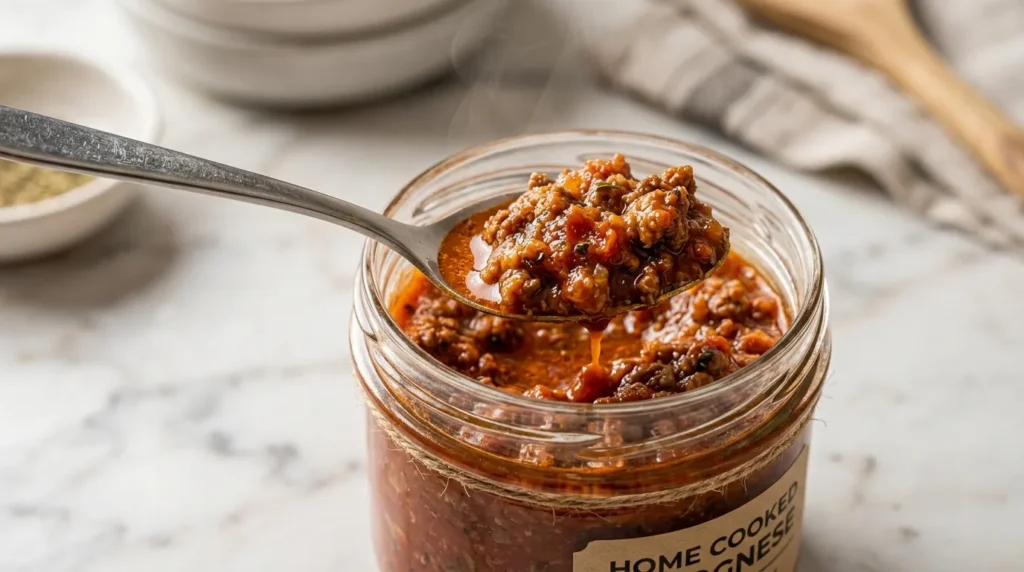
One of the most common ways leftover sauce spoils early is invisible and almost automatic: the double-dipped spoon.
Never taste the sauce with a spoon and then put that same spoon back into the container. Saliva, residual food particles, and airborne mold spores introduce bacteria that multiply rapidly in the rich, moist environment of pasta sauce. The result? A batch that would have lasted four days may be questionable by day two.
Use a completely clean, dry utensil every single time you scoop. If you’re serving from the storage container at the table, transfer only what you need to a serving dish first. This simple habit is one of the highest-leverage food-safety practices you can adopt in a busy kitchen.
How to Store Leftover Pasta Sauce Properly
Never leave sauce in an opened tin can. The metal reacts with the acidity of tomatoes, creating a metallic off-flavor and accelerating oxidation. Transfer everything promptly.
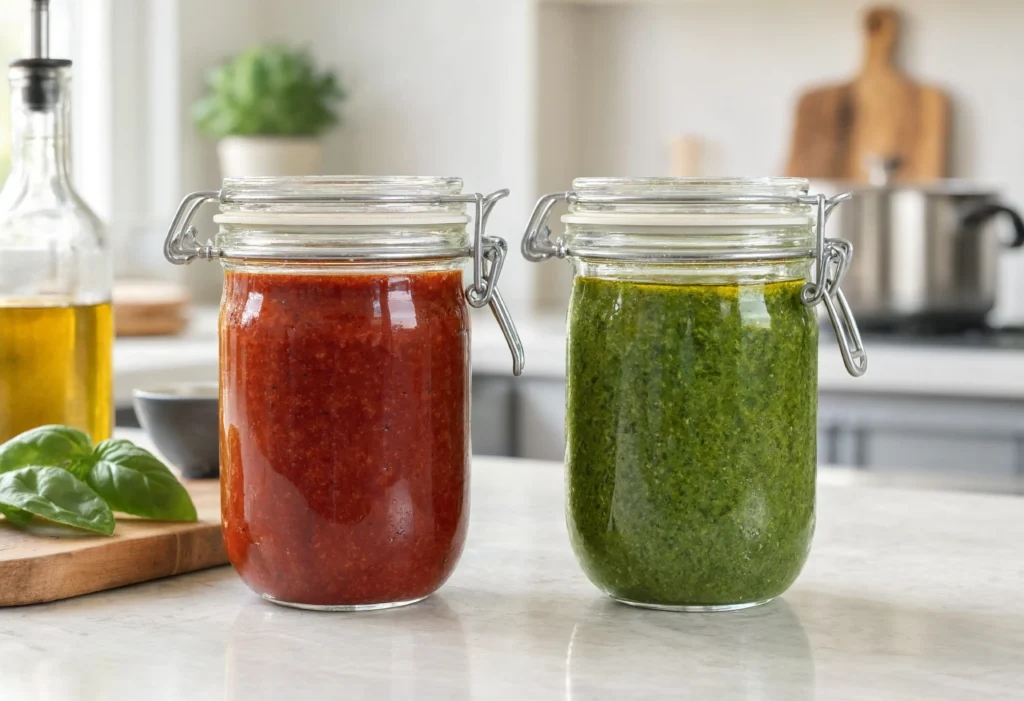
Glass is the gold standard. A clean, airtight glass jar or container does not absorb tomato stains or odors the way plastic can, and it creates a superior seal. BPA-free plastic works in a pinch if it has a tight-fitting lid, but glass remains preferable for long-term flavor integrity.
For pesto or other green herb sauces, use the olive-oil seal trick favored by many professional kitchens: after packing the sauce into a jar, pour a thin layer of good olive oil over the surface. This barrier dramatically slows oxidation and helps the pesto stay bright green instead of turning dull and brown.
Label every container with the date. Future-you will thank present-you when deciding whether something is still good.
Can You Freeze Pasta Sauce?
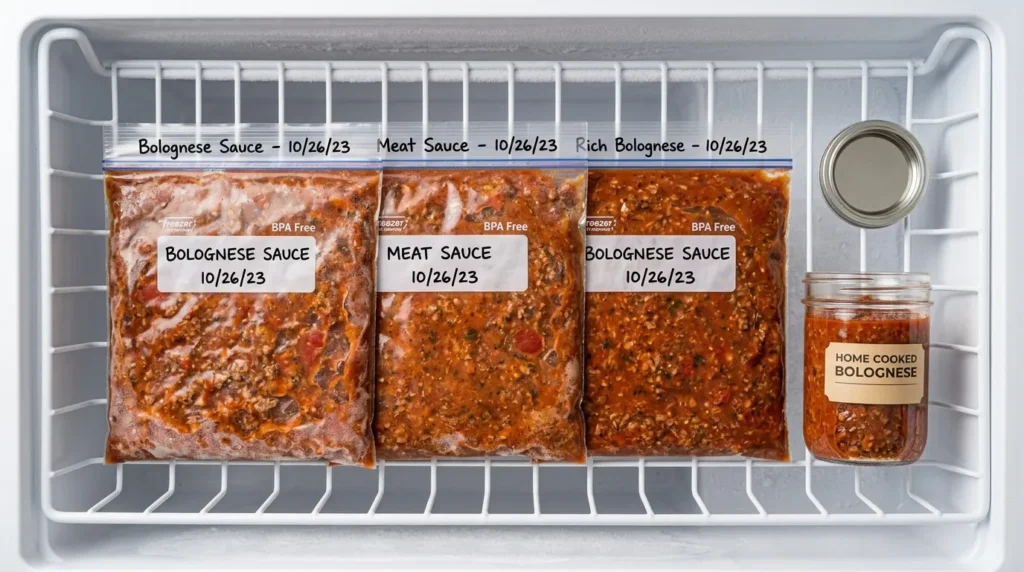
Yes—most tomato-based and meat-based sauces freeze exceptionally well for 3 to 6 months.
Portion the cooled sauce into heavy-duty freezer bags. Squeeze out as much air as possible before sealing to minimize freezer burn. Alternatively, use glass jars, leaving at least one inch of headspace at the top; the liquid expands as it freezes and can crack the glass if packed too full.
Dairy warning: Cream-based sauces such as Alfredo do not freeze well. The fat and dairy proteins tend to separate upon thawing, producing a grainy or broken texture that is difficult to restore fully. If you must freeze a cream sauce, expect to whisk vigorously while reheating and accept that the texture will never be quite the same.
Thaw frozen sauce overnight in the refrigerator. Reheat on the stovetop, stirring occasionally, until it reaches at least 165°F (74°C). A quick microwave reheat is acceptable only if you stir midway and verify the temperature.
How to Spot Spoiled Pasta Sauce
Trust your senses. Discard the sauce immediately if you notice any of the following:
- Visual cues — White, green, blue, or black mold on the surface or under the lid.
- Odor — A sharp, sour, or acrid smell instead of the expected rich, herby aroma.
- Texture — Bubbles, a carbonated appearance, or unusual watery separation that suggests active fermentation.
When in doubt, throw it out. No leftover sauce is worth the risk of foodborne illness.
Keep the Flavor, Skip the Compromise
Fresh ingredients and preservative-free sauces deserve the same care in storage that went into making them. Follow the timelines above, respect the clean-utensil rule, choose the right containers, and freeze smartly when needed. Your future meals will taste noticeably better for it.
Ready to pair those carefully stored sauces with something special? Skip the processed jars and enjoy the best pasta in Vancouver—hand-rolled, made with organic pasta and organic ingredients daily. Order online or visit one of our three convenient branches across the city. While you’re there, explore the full range of vegan Italian Halal food options that make weeknight dinners both effortless and excellent.
Your kitchen (and your taste buds) will thank you.
How do I remove stubborn red tomato stains and lingering odors from plastic storage containers?
Tomato sauce contains lycopene, which easily binds to plastic. To remove these stains, apply a paste of baking soda and water to the inside of the container, let it sit for 30 minutes, then scrub and rinse. To eliminate lingering odors, wash the container with warm water and a splash of white vinegar.
Can I freeze cooked pasta that is already tossed and mixed with the sauce?
Yes, you can, but the texture of the pasta will become significantly softer and slightly mushy upon thawing. If you plan to freeze them together, ensure the pasta is cooked very al dente (underdone) beforehand. For the best culinary results, we always recommend freezing fresh pasta and sauces separately.
How long can cooked pasta sauce safely sit out on the kitchen counter at room temperature?
Under USDA guidelines, cooked pasta sauce should never sit out at room temperature for more than two hours (or one hour if the ambient temperature is above 90°F / 32°C). Beyond this window, the sauce enters the bacterial “Danger Zone,” making it unsafe to eat even if reheated later.
What is the safest way to defrost frozen pasta sauce?
The safest and most recommended method is to transfer the frozen container to the refrigerator and let it thaw overnight. For faster defrosting, you can submerge the sealed container in a bowl of cold tap water, or defrost it directly in the microwave if you plan to heat and serve it immediately.
How long does an unopened, store-bought jar of pasta sauce last past its expiration date?
Unopened jarred sauces stored in a cool, dark pantry can remain perfectly safe to consume for 6 to 12 months beyond the printed “best-by” date. Always inspect the jar before opening; if the lid is bulging, rusting, or loose, discard it immediately.